Showing posts with label Barry Cipra. Show all posts

Monday, 21 April 2014

Rotationally symmetric Venn diagrams

No doubt you will have seen a Venn diagram. They are a wonderful way of presenting logical information. For example, they allow us to illustrate the fact that centaurs lie in the union of objects with male torsos and horse legs (Figure 1).
Figure 1. Not all male torsos are connected to horse legs and vice versa. However, we see that centaurs do lie in the intersection.
Recently there has been an upsurge in using Venn diagrams as way of illustrating jokes, or song titles. My personal favourite explains where the platypus fits in the animal kingdom (Figure 2).
Figure 2. Although not scientifically sound it does show that the keyboard guitar and platypus can be defined as the intersection of two other sets.
Of course you are not restricted to two sets of objects. A Venn diagram can be made of any number of sets. For example Figure 3 illustrates the some of the lyrics from the song “The Joker” by the Steve Miller Band.
Figure 3. A seven set intersection diagram illustrating the characteristics of certain famous people.
Technically, Figure 3 illustrates an Euler diagram and not a Venn diagram. A Venn diagram contains every single possible intersection between all combinations of the sets, whereas an Euler diagram only shows the intersections you are interested in. For example, in Figure 3 there is no section where only grinners and jokers intersect (this could possible contain Heath Ledger).

When dealing with two or three sets the obvious Euler diagram is also a Venn diagram (Figure 4). Interestingly, they both also have rotational symmetry. This will be considered in more detail in the next article.
Figure 4. Two and three set Venn diagrams.
However, when we get to four circles, things are not so easy anymore and the basic Euler diagram (Figure 5, left) is no longer a Venn diagram. However, by removing the restriction that the groups have to be circles we can once again produce a four set Venn diagram (Figure 5, right). Sadly though, we have lost the pleasing rotational symmetry.
Figure 5. If only circular shapes are used we cannot create a Venn diagram, only an Euler diagram (left). However, by generalizing the set's shape, we can produce a Venn diagram once more (right).
Next time I will present another part of the discussion with Barry Cipra and we will see under what conditions Venn diagrams can have rotational symmetry.

Monday, 7 April 2014

Sol LeWitt Solution


Last time I introduced the Sol LeWitt’s problem, devised by the eminent mathematical reporter Barry Cipra. The challenge was to take the tiles, as presented in the left image of Figure 1 and rearrange them such that all the lines form continuous rows, columns and diagonals across the grid. As I revealed there are many solutions, one such solution is presented in the right image of Figure 1.
Figure 1. Left: the original Sol LeWitt tiles. Right: an arrangement in which all lines cross the entire grid.
I also mentioned that there were some special relationships between certain solutions. For example rotating a solution through 90 degrees, reflecting it, or performing a combination of these two operations generates another, related solution. Furthermore, we can take the topmost row (or the leftmost column) and moving it all the way to the bottom (or to the right). Explicitly, a set of solutions can be drawn on the surface of a torus.

This leaves us with a new question. Are there any solutions which cannot be generated in such a way? Namely, starting from one solution are their other “distinct” solutions, which cannot be created through rotations, reflections or row/column operations. Each distinct solution will then generate a different solution set, which will lead to different to tori.

The famous mathematician John Conway demonstrated that there are actually three distinct solutions, from which all others can be derived. One has been given above. Can you find the other two possible distinct solutions?

As I was talking to Barry about this puzzle he told me a nice anecdote, where he had used this puzzle in a workshop involving maths teachers and maths researchers that had been paired together. He said that the teachers were constantly moving the pieces around, effectively using trial and error, whilst their researcher partner would sit back and think about the pieces. Eventually, one researcher claimed that the puzzle was impossible, not a moment later his partner produced a working solution! Let this be a lesson to any mathematician. Theory is all well and good, but practical intuition is invaluable.

Monday, 24 March 2014

The Sol LeWitt puzzle

One of my favourite puzzles created by Barry Cipra was originally not a maths puzzle at all. The puzzle is based on a design by artist Solomon LeWitt. Sol LeWitt (after whom the puzzle is named) was a conceptual artist who often featured geometric and combinatorial themes to give a minimalist style to his works. His etching picture, titled Straight Lines in Four Directions and All Their Possible Combinations, is illustrated below in Figure 1, on the left.

Figure 1. Left: the Sol LeWitt tiles. Right: an example of a red line connecting the edges through all the tiles and an example of a blue line that does not.

To everyone except Barry this image simply showed 16 squares with lines drawn on them. However, Barry’s imagination was ignited when he noticed that some of the lines extend continuously from one side of the large square to another (red diagonal line in the right-hand of Figure 1), whilst others do not (blue horizontal line in the right-hand of Figure 1).

From this simple setting Barry asked the question:
"Is it possible to rearrange the tiles such that the resulting 4x4 grid has a pattern that allows all horizontal, vertical and diagonal lines to extend continuously across the grid, without interruption?"
 Importantly, you are not allowed to rotate any of the pieces!

The simple answer is yes, you can produce such a pattern. In fact there are quite a few solutions to the problem! Have a go yourself. Cut out the squares and see you if can find one of them. Although finding one solution is satisfying, the more interesting investigation is finding a link between solutions.

Produce a few solutions and see if you can see some relation between them. Once you spot the link you will see how to produce many more solutions very easily. Not bad for a simple work of art!

Next time I will fill in the rest of the details, by presenting not only a solution but also furnishing you with the solution link that I am alluding to.
Good luck

Monday, 10 March 2014

Barry's journey through science journalism.

This week we continue with Barry Cipra’s life story and delve more into his career, whilst see just how much luck you need to enjoy a career in science journalism.
________________________________________________________________
________________________________________

How did you get your big break?
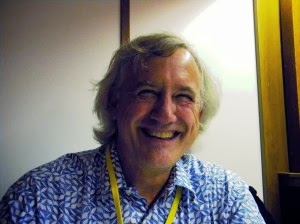
Figure 1. Barry Cipra. Photo by Marlene Knoche
I had links with Lynn Steen from when I was St Olaf’s college. He is a very good writer and was very active in maths education. Early on he discovered that I was a fairly good writer and I often spoke to him about taking my mathematical writings further. In my mind I would follow in the popular science footsteps of Martin Gardener, or Ian Stewart. I had no notion of science writing as a journalist. It was Lynn that pushed me towards reporting.

It was around this time, early 1987, that Gina Kolata left Science magazine for the New York Times. She had done all of the maths news reporting for Science magazine. Lynn, being amongst other things the maths secretary of AAAS, which publishes Science magazine, called up the editor and put my name forward. Much of the credit, and blame, for what I have become is directly attributable to Lynn Steen!

It only dawned on me later how unusual it was to get a call from the editor of one of the most prestigious journals in the world and have them ask me to write for them. That’s why I always try and offer any help I can give to the new generation of science writers.

As you say, you were very lucky to get your big break into science journalism. Do you think it is easier, or harder, now-a-days to make a career in science writing?
Honestly, I don’t know.

What is true is that because there are so many more possible sources of self publishing there are many more people doing it. Most of this is unpaid and done purely as a hobby, but occasionally it does attract attention of people which then pushes them towards further opportunities. In essence it’s a buyer’s market. Editors have more choice of science writers to choose from.

What is your favourite area to report on?
I try to report on as wide a range of topics as possible, so I don’t get trapped in a single niche. I enjoy reporting on the applications on mathematics, not only because they’re very important, but also (being a lazy journalist) you can easily connect it to your audience’s experiences.

One of my favourite stories was from mathematical economics, where they were trying to match donors and recipients for kidney transplants. Alvin Roth, the man behind this research, recently won the economics Nobel prize, partly for this work. I like to think my article bought his work to the attention of the judges!
Overall it’s a good topic because the problem is easy to explain, the mathematics is fairly simple and the dramatic outcome is amazing. Importantly, with just a little maths you gain the ability to prove that your system is completely resistant to people trying to cheat the system.

Perhaps my favourite piece of all time was on rotationally symmetric Venn diagrams. It was easily explainable maths linked with incredibly beautiful results.
[Barry expanded on this greatly and will be the subject of an article later]

What advice would you give to the next generation of science writers?
Firstly, I would say: don’t do it! I was very lucky to get the breaks I did. However, if that doesn’t dissuade you I would firmly recommend one of these formal science writing courses, such as the one University of California, Santa Cruz. They produce first rate reporters, who all speak highly of the program.

A key piece of advice I can give for a successful career in journalism is find a good editor and be able to take criticism. By the very nature of writing it is very easy to get into a mental rut of saying things in one way. It is very useful to get someone else to look at your work and give an alternative explanation.
________________________________________________________________
________________________________________
Although this is the end of Barry’s biography, we are not done with him yet. Over the next few posts I will highlight a few of the beautiful puzzles and games that he introduced to me.

Monday, 24 February 2014

The making of Barry Cipra

On the second of October 2013 I got the chance to meet up with mathematical journalist Barry Cipra. He is a regular contributor to SIAM news as well as a correspondent for Science magazine. He writes the “What’s Happening in the Mathematical Sciences” series, and is the author of “Misteaks... and How to Find Them Before the Teacher Does: A Calculus Supplement”.

He was in Oxford to cover the opening of the new Mathematical Institute and the accompanying Clay conference which presented talks on the cutting edge of pure mathematics. However, my interest was piqued when he gave a talk called
“The benefits of not paying attention”.
Being a huge maths puzzle fan I turned the tables on Barry and so the reporter became the reported.

Over the next few weeks I will present Barry’s interview, in which we touch on: his history, his suggestions for people trying to break in to science journalism and, finally, some puzzles that he created when his attention should have been elsewhere.
________________________________________________________________
________________________________________
Since your job is to take mathematical ideas and make them understandable to a general audience, could you describe your Ph.D work on modular forms?
Figure 1. Barry Cipra.
There is a famous sequence in a documentary of Fermat’s last theorem, in which a number of eminent mathematicians such as Peter Sarnak and John Conway were asked to describe modular forms… they all just laughed. However, I will try my best.

Modular forms are analytic functions that embody all sorts of number theoretic information. The specific thing I worked on was something called the Shimura lift [1], which allowed us to map modular forms of half integral “weight” to integral weight. Shimura’s original work was incredibly general, but only kicked in when the weight was 5/2, or larger. My work at Maryland was to reduce this to weights of 3/2.

As you can see, my work was very technical. Personally I am impressed at how much I can remember from over 30 years ago!

Where did your career take you after Ph.D?
During my first post-doc at MIT I began talking to a visitor of the chemistry department, who was really a mathematician at heart. We spoke about a problem he was having in ferromagnetism and its links to the Ising model, which is a problem in statistical physics. From our work together I wrote a beginners guide to the Ising model and its underlying mathematics. This led to me receiving a highly complementary letter through the mail, written in shaky handwriting, from a 90 year old Ernst Ising. I really should get the letter out some time to ensure that he really was saying nice things about me. At least I don’t remember him pointing out mistakes.

I then had a string of further post-docs and when I came to the end of my last one I looked around at academic positions and the alternatives of getting a “real job”. Luckily I had a number of contacts who pushed me in a different direction.

When was the decision to move towards journalism? Was it a conscious decision? Or was it a more gradual process?
It was pretty conscious as I’ve always had an interest in writing; ever since grade school. My only formal training was a journalism class I took at my high school and then worked on the school newspaper the following year.

Do you miss doing, rather than reporting, maths?
I still dabble in low level, recreational style problems. I try to come up with problems that may have some deeper connections. Quite a few of the problems I’ve generated are simple to state but defy simple explanations. However, if there is any true significance in my questions, I leave that up to the researcher trying to find the answer.

I did collaborate with some people from St Olaf’s college on a “billiards in polygons” problem, particularly in right angled triangles. We proved that if you started on one of the sides that wasn’t the hypotenuse and shot the billiard ball at a right angle from your chosen starting point then for almost all starting points, the trajectory is periodic.

My main role in all of this was to say,
“I don’t really understand what you just said, could you explain it a bit more?” and then, hopefully, “ah yes, I see we can now make that mathematically rigorous”.
________________________________________________________________
________________________________________
Next time Barry will be giving us a few tips on how best to go about getting into science journalism. See you then.

[1] A a pertinent paper can be found here. Although it is not for the faint hearted, or those without a degree in modular forms, you can clearly see from the first few lines that they use Cipra’s theorem. Sadly, being an applied mathematician I will never have theory named after me.